Why Are Creative Storage Solutions Important?
A home can feel cramped even when it has plenty of floor space. Shoes gather beside the door, pans crowd a cabinet, and papers claim the kitchen counter. These small piles make everyday tasks harder. They can also make a room feel less restful. Creative storage solutions turn overlooked areas into useful space, while keeping frequently used belongings within reach. The goal is not to hide everything. It is to make a home work better for the people who live in it.
Space and storage demand are real concerns. The National Association of Home Builders, analyzing U.S. Census Bureau data, reported that newly completed single-family homes averaged 2,411 square feet in 2023. Yet floor area alone does not guarantee an organized home. The Self Storage Association’s 2024 Self-Storage Demand Study reported that 11.1% of U.S. households rented self-storage in 2023. That figure describes rented units, not household clutter, but it signals that many people need space beyond their homes. Still, storage is not magic. A tall shelf may clear a counter but make daily items harder to reach. A good plan starts with real routines: where keys land, which pans are used, and what needs to stay visible. Some experiments will not work. That is useful feedback, not failure. The most effective choices balance access, safety, and available space, then adapt as household needs change.
Creative storage solutions are practical ways to use space that ordinary shelves and cupboards may miss. They might include a slim rack beside a refrigerator, labeled containers inside a deep drawer, or hooks mounted near an entryway. The aim is not to fill every empty corner. It is to keep useful items visible and easy to reach. Small changes matter. A tray near the door can hold keys, while a low basket makes children’s books easier to put away. When storage matches daily habits, rooms often feel calmer without requiring more furniture.
Understanding these solutions starts with observing what people actually use and where clutter gathers. Measure the space before buying or building anything; a few centimeters can decide whether a drawer opens freely. For instance, vertical dividers can keep baking sheets upright, but they may waste space if the cabinet is narrow. Open containers make frequent items accessible, while closed boxes help reduce visual clutter. There is a trade-off. Every organizer also needs cleaning and upkeep, and a clever setup can become inconvenient if it takes too many steps. It is worth testing an arrangement with items already at home before making permanent changes. Sometimes the simplest idea works. Sometimes it doesn’t.
Innovative storage makes better use of space when it fits the way people move through a room. A shallow shelf above a desk can hold notebooks without taking over the work surface. Hooks beside the entry keep bags off the floor, while a bench with drawers gives shoes a place to land.
Small changes matter.
Before installing anything, measure the wall, door swing, and walking path. A cabinet that blocks a light switch may create more frustration than storage.
Flexible storage can help one room serve several purposes. A folding table can act as a weekday work surface and tuck away when dinner is ready. Clear bins under a bed make seasonal clothes easier to find, though labels help only if they stay accurate.
In daily use, frequently needed items belong within easy reach; rarely used equipment can go higher or farther back. It is easy to over-plan a tidy room. A solution may look clever on paper but feel awkward after a week, so leave some space to adjust.
Why Are Creative Storage Solutions Important?
How Organized Storage Improves Access and Efficiency
Storage works best when it follows the way people actually move through a room. Keep everyday items near the place they are used: cooking tools beside the preparation area, or mail near the entry. A shallow tray can hold keys without swallowing them beneath larger objects. Small labels help, too, especially when several containers look alike. Easy to reach matters. If a box sits behind three others, it is not really convenient storage. Clear paths and visible contents reduce time spent searching and make routine tasks feel less scattered.
Flexible storage can improve access without requiring a perfect system. Use one shelf for current projects and another for supplies that are used less often. Transparent containers make contents easier to spot, while open baskets suit items that need quick access. Leave a little empty space. Overfilling shelves makes objects hard to remove and put back, and it can hide what is already there. I have found that a neat arrangement may still fail if it ignores daily habits; a frequently used item placed too high will soon end up on a counter. Review the setup after a few weeks, then adjust what feels awkward. Some clutter returns. That is useful feedback, not proof that the system has failed.
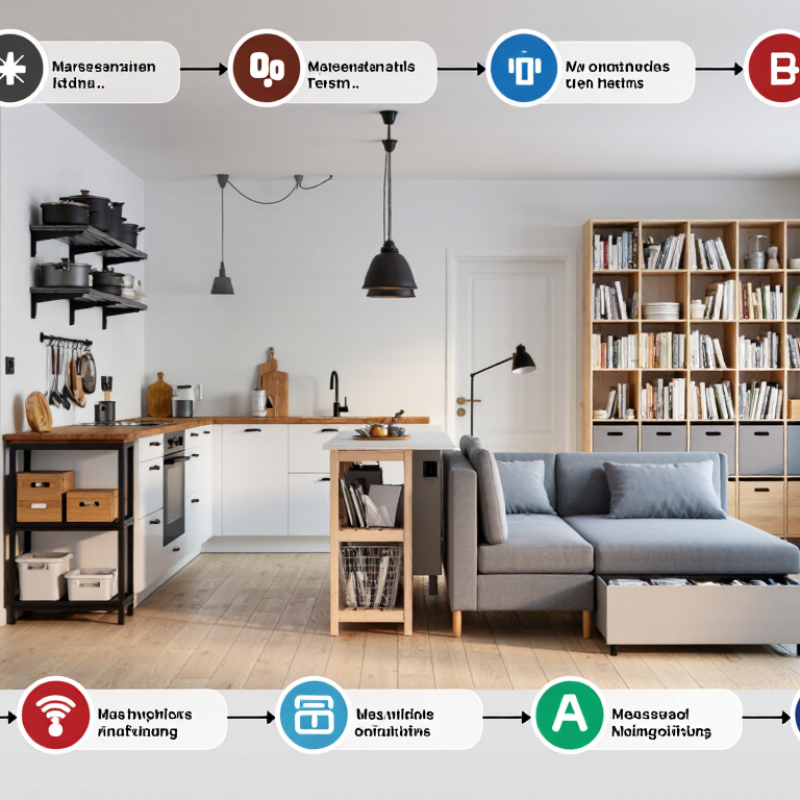
A simple workflow model showing how clear storage zones and labels can reduce the steps involved in finding and returning an item. Values are illustrative, not results from a measured study.
Organized storage makes locations easier to recognize, helping people access items and put them back consistently.
Storage design shapes how a room feels during ordinary routines. A drawer beside the entry can keep keys and gloves within reach, while a clear path prevents bags from becoming obstacles. These small details reduce daily friction. Less searching. More room to breathe.
Comfort also depends on what storage hides and what it leaves visible. Closed cabinets can soften a busy room, especially when counters collect paperwork, chargers, and cups. Open shelves make useful items easy to find, but too many can create visual noise. In a small bedroom, a shallow shelf above a desk may free floor space without making the room feel crowded. The fit matters more than the storage capacity.
A useful plan starts with watching how people actually use a space. Notice where coats land and which items are repeatedly moved. Then place storage near those habits, rather than expecting everyone to change them. Still, tidy storage is not a cure for every source of stress. Some rooms remain cramped, and an over-organized system can feel fussy. I would rather leave a little empty space than fill every corner with a container.
Adaptable storage matters because rooms rarely keep the same purpose for long. A spare bedroom may become a work area, then make space for a new family member. Storage that can move, expand, or serve more than one function helps a room change without a full renovation. Needs shift.
In practice, this might mean adjustable shelves for books, baskets, and equipment of different sizes. A rolling cart can hold craft supplies near a table, then tuck beside a cabinet when the room needs more floor space. Modular units can be rearranged as collections grow or routines change. Measure the wall and check how doors open before adding anything; a flexible system still needs to fit safely and leave clear walkways.
Adaptability is useful, but it is not magic. Pieces that are easy to move may feel less sturdy, and too many containers can make belongings harder to find. I have seen a neat-looking setup become a cluttered one when labels and everyday habits were ignored. Start with what people actually use, keep frequently needed items within reach, and leave some room for change. A little empty space can be practical. It can also feel wasteful at first.
| Changing Need | Typical Storage Challenge | Adaptable Storage Approach | Practical Benefit |
|---|---|---|---|
| Working from home | A desk, equipment, and paperwork need to share space with everyday living activities. | Use a fold-down desk, mobile drawer unit, and closed shelving that can hold work items after hours. | Helps a room shift between work and personal use without permanently dedicating floor space to an office. |
| Children growing and changing activities | Toys, books, clothing, and hobby supplies change in size and quantity over time. | Combine adjustable shelves with labeled bins and low, easy-to-reach compartments. | Storage can be reorganized as children become more independent or take up new activities. |
| Seasonal household items | Bulky items such as coats, bedding, fans, or sports equipment are not used year-round. | Use stackable containers, under-bed storage, and high shelves for items that are currently out of season. | Frequently used belongings remain accessible while occasional-use items take up less everyday space. |
| Small or shared living spaces | Limited floor area must accommodate several functions and more than one person’s belongings. | Choose vertical shelving, storage benches, wall-mounted organizers, and furniture with built-in storage. | Makes use of often-overlooked areas and can keep shared walkways clearer. |
| Moving or rearranging a home | Fixed-size storage may not fit a new room layout or a different household. | Use freestanding modular units, adjustable shelves, and lightweight containers that can be moved individually. | Components can be rearranged or relocated instead of being tied to one room configuration. |
| Changing mobility or accessibility needs | Items stored too high, too low, or behind heavy doors can become difficult to reach. | Place everyday items within comfortable reach and use pull-out drawers or open-front bins where suitable. | Improves access to commonly used belongings as household needs change. |
Adaptable storage works best when frequently used items are easy to reach and the system can be adjusted without replacing every component.