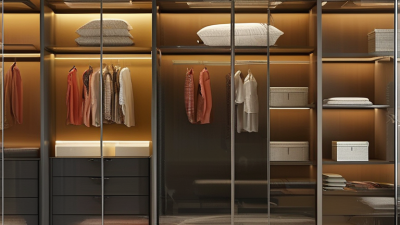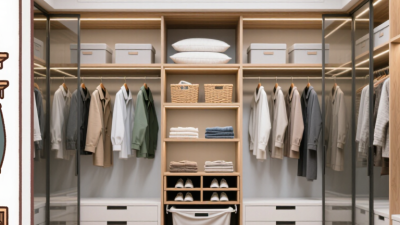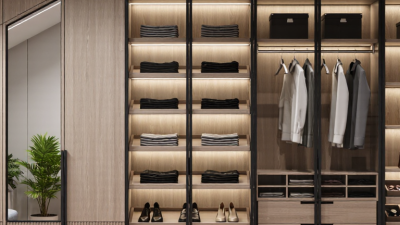
In 2026, creative storage solutions are becoming essential for global buyers facing smaller rooms, higher housing costs, and changing work habits. Storage is no longer limited to wardrobes and plastic bins. It now includes modular wall systems, foldaway desks, hidden kitchen organizers, stackable baskets, and furniture with built-in compartments. A narrow entryway may need a shoe drawer, charging shelf, and mirror in one compact unit.
As organizing expert Peter Walsh has said, “Your home should be a place that supports your life, not a place that drains you.” This principle matters when selecting products across international markets. Buyers should examine load capacity, material safety, assembly instructions, moisture resistance, and replacement-part availability. Bamboo, recycled steel, certified wood, and durable textiles can support more responsible purchasing. Yet sustainability claims still require evidence. A green label alone proves little.
Good storage must also respect local living patterns. A small apartment in Tokyo may require vertical expansion. A family home in Toronto may need seasonal storage. Retailers should consider metric sizing, regional electrical standards, language clarity, and dependable delivery. Practical testing helps. Measure the corner. Open the doors. Check the hinges.
No system is perfect. A beautiful cabinet can still waste usable space. A clever organizer may become frustrating after daily use. This guide examines creative storage solutions through real purchasing needs, design performance, durability, and long-term value. It also questions popular trends, because attractive storage should serve people first.
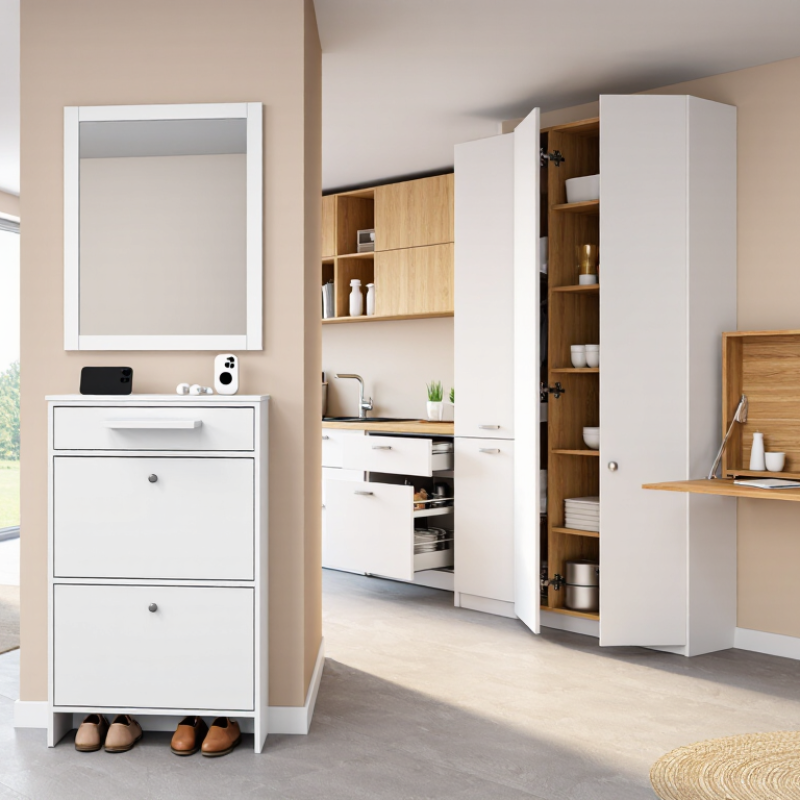
Creative storage solutions are practical systems that use space in smarter, more flexible ways. They may combine shelves, drawers, hooks, hidden compartments, or movable units. The goal is not decoration alone. It is easier access, better organization, and less wasted space.
For global buyers, a creative solution should match the room, climate, and daily habits. A narrow rolling cart can serve a small kitchen. Wall-mounted storage can free floor space in compact apartments. Modular units can change as families, offices, or product collections grow. Material selection matters too. Humid regions may require moisture-resistant surfaces, while colder areas may need stronger fittings. Check dimensions, weight limits, assembly instructions, and available replacement parts before ordering. A stylish unit can still fail if its shelves bend under real use. That mistake is easy to overlook.
Tips: Measure the installation area twice. Leave space for doors and movement. Test whether the structure suits local wall types. Ask for clear product drawings and safety information. Choose simple packaging when possible, but do not sacrifice protective cushioning. Review customer feedback for assembly problems, unstable joints, and inaccurate measurements. There is no perfect storage system. The best choice balances appearance, durability, access, shipping conditions, and future needs.
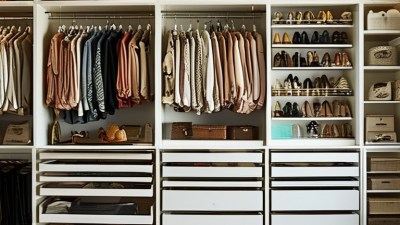
Classify storage by space before choosing materials or finishes. Urban households now represent about 56% of the world’s population, according to World Bank data from 2023. This makes compact, flexible storage increasingly important. For kitchens, use shallow pull-outs near work zones. Bedrooms benefit from vertical cabinets, under-bed boxes, and adjustable rails. Entryways need narrow shelves, hooks, and a visible drop zone. Measure door swings, wall depth, and walking clearance first. A beautiful unit can still block daily movement.
Function determines internal structure. Separate daily-use items from seasonal goods, documents, tools, and electronics. The Global E-waste Monitor 2024 recorded 62 million tonnes of electronic waste in 2022. It projects 82 million tonnes by 2030. Storage should therefore include ventilated compartments, cable access, and clear labeling. Design then shapes the experience. Natural textures can soften metal frames, while transparent panels improve visibility. However, too much openness creates visual noise. I have found that buyers often underestimate dust, humidity, and replacement-part access.
Tips: Request material samples and load-test results before placing large orders. Compare flat-pack dimensions with local delivery limits. Leave 15–20% spare capacity for future needs. Do not trust every “space-saving” claim; test the actual usable volume. A perfect layout may still fail when family habits change.
Choosing storage starts with the user, not the product. A small apartment needs vertical units, folding parts, and clear access paths. A family may need labeled drawers, child-safe edges, and flexible compartments. In my experience reviewing storage layouts, people often measure the wall but forget door swings and walking space. That mistake is costly.
For offices, prioritize cable control, document protection, and quick retrieval. Retail buyers may need modular shelves that adapt to changing inventory. In humid regions, moisture-resistant materials and ventilation deserve careful attention. In dry climates, static buildup and brittle plastics can become practical concerns. Check load ratings, surface finishes, assembly instructions, and replacement-part availability before ordering. Do not trust attractive photos alone.
Accessibility also changes the decision. Frequently used items should sit between knee and shoulder height. Handles need a firm grip without sharp edges. Older users may prefer sliding drawers over deep cabinets. Global buyers should confirm dimensions, packaging strength, installation requirements, and local safety expectations. Standards differ across markets. A universal solution rarely exists. Sometimes, the simplest design works best. I still question whether every clever feature adds value. Extra mechanisms can increase repair needs and confuse users. Test one unit in real conditions before committing to a larger purchase.
Creative storage now serves two demanding spaces: the home and the workplace. The National Association of Home Builders’ 2024 buyer survey found that 87% of buyers considered a laundry room essential or desirable. A walk-in pantry reached 85%. These figures support tall pantry walls, pull-out baskets, and under-stair drawers. They also reveal a practical truth: storage must follow daily movement, not decoration.
For home offices, combine closed cabinets with one open shelf. Closed doors hide cables, paperwork, and visual noise. Open shelves keep notebooks and frequently used tools within reach. A 2024 global workplace survey reported that only about 43% of employees rated their workplace highly effective. Flexible storage can help, but it cannot repair poor lighting or uncomfortable seating. That matters for global buyers with different room sizes and work habits.
In smaller rooms, use vertical rails, fold-down desks, and furniture with removable dividers. Choose moisture-resistant materials for humid regions, and verify wall loads before mounting heavy units. Modular parts suit renters and future relocations better than permanent construction. Still, modular systems may look untidy without clear categories. A useful test is simple: can someone return an item within ten seconds? If not, the design needs revision. Storage should also respect local fire safety, accessibility, and electrical requirements. Shelves are not always the answer.
Global buyers should evaluate storage suppliers beyond polished catalogs. A clever foldable shelf is not useful if its hinges loosen after repeated use. Request a sample, supplier profile, factory address, test records, and recent production photos. ISO Survey 2023 recorded more than 1.26 million ISO 9001 certificates worldwide, but certification alone cannot prove product quality. Ask how the supplier controls incoming materials, dimensions, assembly, and final inspection.
Test the product in realistic conditions. Load each shelf above its stated capacity for 24 hours. Open drawers repeatedly. Check wobbling on uneven floors and corrosion after humid storage. For wall-mounted systems, verify anchors against the destination wall type. Ask for carton drop-test results and packing dimensions, because shipping damage can erase a low unit price. The World Bank’s Logistics Performance Index 2023 compares 139 economies through customs, infrastructure, tracking, and timeliness. Use those indicators when comparing delivery promises, not just quoted lead times.
Materials also deserve careful questions. UNEP’s Global Resources Outlook 2024 warns that global material extraction could rise by 60% by 2060 without major changes. Prefer repairable parts, recycled content with evidence, and packaging that avoids unnecessary void space. Request material declarations and independent safety reports for coatings, plastics, and adhesives. Be skeptical here. “Eco-friendly” is not a measurable specification. A supplier may pass a factory audit yet still provide inconsistent colors or incomplete installation instructions. Compare at least three samples, record every defect, and include corrective-action deadlines in the purchase contract.
| Evaluation Dimension | Recommended Weight | Product or Supplier Data to Review | Suggested Buyer Benchmark | Verification Method | Priority |
|---|---|---|---|---|---|
| Space Efficiency | 15% | External dimensions, internal capacity, stackability, nesting ratio, and usable volume. | At least 80% of the external footprint should provide usable storage space; confirm that products fit the target shelf, drawer, or cabinet dimensions. | Review dimension drawings and conduct a physical fit test using standard household or office items. | High |
| Material Safety | 12% | Material composition, coatings, adhesives, dyes, and intended-use restrictions. | Material information should be fully disclosed, with test documentation appropriate to the destination market and intended use. | Request a current material declaration and independent laboratory test reports where applicable. | High |
| Load Capacity and Durability | 12% | Maximum recommended load, shelf strength, hinge or joint performance, abrasion resistance, and cycle testing. | Load ratings should be stated in kilograms, supported by test conditions, and include a clear safety margin for normal use. | Compare supplier test records with buyer-defined loads; inspect joints, handles, runners, and folding mechanisms. | High |
| Creative Functionality | 10% | Modularity, adjustability, foldability, multi-purpose use, labeling options, and access to stored items. | The design should solve a specific organization problem without adding difficult assembly, unstable parts, or unnecessary components. | Use a sample in a real storage scenario and record setup time, access time, and user feedback. | High |
| Supplier Quality System | 12% | Quality-control procedures, incoming-material inspection, in-process checks, final inspection, traceability, and corrective-action records. | The supplier should provide documented inspection criteria, batch records, defect classifications, and a repeatable sampling process. | Review quality manuals, inspection forms, production records, and a recent corrective-action example. | High |
| Order Flexibility | 8% | Minimum order quantity, sample policy, customization options, packaging variations, and replenishment capability. | Commercial terms should support a controlled sample order before a large production commitment, especially for new designs. | Request a written quotation showing sample charges, minimum order quantity, tooling fees, and reorder conditions. | Medium |
| Production and Delivery Reliability | 10% | Production capacity, lead time, on-time delivery history, peak-season planning, and export documentation capability. | Lead times should be stated in calendar days with clear milestones for approval, production, inspection, and dispatch. | Compare historical delivery records with purchase-order commitments and request a written production schedule. | High |
| Packaging and Transit Protection | 7% | Packaging dimensions, carton strength, protective materials, drop-test results, pallet configuration, and damage-control procedures. | Packaging should protect corners, hinges, surfaces, and moving parts while keeping dimensional weight and excess packaging under control. | Approve a packaging sample and conduct simulated handling or controlled drop testing before mass production. | High |
| Sustainability and Circularity | 6% | Recycled content, renewable materials, repairability, replaceable parts, recyclability, and packaging reduction. | Environmental claims should identify the material percentage, calculation basis, and applicable verification instead of using general marketing language. | Request material declarations, packaging specifications, and evidence supporting recycled or recyclable-content claims. | Medium |
| Total Cost of Ownership | 8% | Unit price, tooling, testing, packaging, freight, import charges, storage cost, defect allowance, and expected service life. | Evaluate landed cost rather than unit price alone; include replacement, return, and damage costs in the comparison. | Build a landed-cost worksheet using the same delivery terms, order quantity, currency, and destination for every supplier. | High |
| Recommended Evaluation Model | 100% | Score each dimension from 1 to 5, multiply by the recommended weight, and compare suppliers using the same evidence requirements. | |||