China Top Warm Eye Compresses Suppliers for Global Buyers
Warm Eye Compresses have moved from simple household care to a considered category for eye-care brands and global buyers. The TFOS DEWS II Epidemiology Report found that dry eye prevalence estimates vary widely, from 5% to 50%, depending on population and diagnostic criteria. That range is a reminder: one market figure cannot describe every buyer or user. It does, however, underline why product claims and sourcing details deserve careful review.
Clinical guidance offers useful context. In the TFOS DEWS II Management and Therapy Report, ocular-surface researcher Jennifer P. Craig and co-authors describe heat application as “a commonly recommended therapy for meibomian gland dysfunction.” This is clinical context, not a promise that every compress will work for every person. For buyers, practical checks include even heating, comfortable contact, clear instructions, and consistent quality between batches. Small details matter. A seam that presses near the eyelid can change the experience.
China’s suppliers serve varied needs, from reusable bead-filled masks to single-use warming pads. Buyers should compare temperature duration, materials, packaging, customization options, and documented quality controls—not just unit price. Ask for samples and test them under realistic conditions. It takes time. Supplier claims also need verification; a polished catalog is not evidence by itself. This guide introduces key considerations for evaluating China-based Warm Eye Compresses suppliers and building a more reliable shortlist. One limitation remains: supplier capabilities change, so current documentation and direct checks matter more than any static ranking.
Understanding Warm Eye Compresses and Their Uses
Warm eye compresses apply gentle, sustained heat to the closed eyelids. They are commonly used to soften oily material in the eyelid glands, helping support tear-film function. The TFOS International Workshop on Meibomian Gland Dysfunction describes heat as a way to soften thickened gland oils. A clean, comfortably warm compress is practical. Too hot is not better.
Use a purpose-made compress according to its instructions, or a clean cloth warmed with water. Place it over closed eyes for the recommended time, often around five to ten minutes, and rewarm it if it cools. Keep pressure light. Stop if the skin stings or becomes unusually red. Small details matter. Shared or poorly cleaned cloths can irritate eyelids, and warmth does not replace an eye examination when symptoms persist.
The TFOS DEWS II Epidemiology Report found dry-eye prevalence estimates ranging from 5% to 50%, reflecting differences in populations and diagnostic methods. That wide range is a useful caution: gritty eyes do not always have the same cause, and a warm compress will not address every problem. People with ongoing pain, vision changes, marked redness, or symptoms that worsen should seek advice from an eye-care professional. Heat may soothe; it is not a diagnosis.
Main Product Types, Materials, and Heating Methods
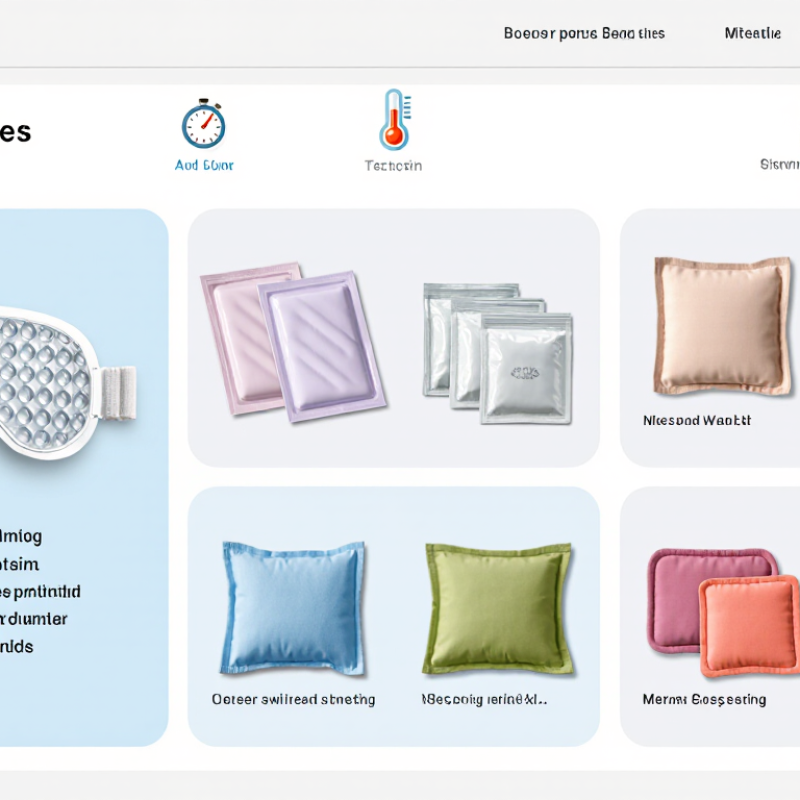
Warm eye compresses are offered in several formats, and the right choice depends on use, comfort, and care requirements. Disposable self-heating masks are lightweight and convenient for travel. Reusable gel packs can be warmed in hot water or a microwave, following the maker’s instructions. Electric versions use a cord or rechargeable power source to provide adjustable warmth. Some products use moist heat; others feel dry. Small differences matter.
Materials shape the experience. Cotton and soft nonwoven fabric sit close to the skin, while removable covers make reusable packs easier to clean. Gel fillings hold heat, but their warmth can fade unevenly if the pack is not heated as directed. Grain-filled masks feel flexible and gently weighted. Self-heating designs commonly rely on air-activated components, so buyers should check sealed packaging and clear usage guidance. Soft fabric helps, but it is not a safety guarantee.
Heating method deserves careful review. Look for temperature controls, timed shutoff, and plain instructions for electric models. For microwaveable products, heating time depends on the appliance and pack size. Never assume one setting suits every model. A neat specification sheet can still leave questions about real comfort; supplier samples and consistent quality checks help reveal them. Check seams, odor, and heat distribution. Small details count. A warm mask should feel soothing, not hot, and users should stop if discomfort occurs.
How to Assess Chinese Warm Eye Compress Suppliers
When assessing Chinese warm eye compress suppliers, look beyond polished product photos. Request a sample and check its fabric, seams, filling, odor, and comfort after repeated use. Ask how the compress warms, what temperature range users can expect, and whether heating instructions are tested for consistency. A pleasant sample matters, but it is not proof of stable production. Ask for material specifications, batch records, inspection procedures, and relevant test reports. Verify that documents match the exact model you plan to order.
Tips: Send the same questions to several suppliers. Compare sample quality, response times, minimum order quantities, and quoted lead times. Ask how defects are handled and whether packaging can protect products during shipping. Keep written answers for later checks.
Production details reveal a lot. Request photos or a live video of the relevant production steps, and confirm who performs final inspection. Clarify packaging dimensions, labeling, and carton counts before approving a purchase order. A supplier’s careful answers are useful, but they still need verification against samples and records. Even a thorough checklist leaves some uncertainty; I would recheck a new batch, especially if materials or production sites change. Avoid relying on broad comfort or wellness claims without clear supporting evidence.
Manufacturing Standards, Quality Control, and Compliance
China’s warm eye compress suppliers serve buyers with different product designs, from reusable gel packs to powered warming masks. Manufacturing standards should match the product, not just the sales brochure. For each model, buyers can request material specifications, approved drawings, and a clear inspection plan. Small details matter. Stitching should remain even, seals should resist leakage, and fabric should feel consistent across batches.
Quality control works best at several production points. Incoming materials can be checked for dimensions, odor, and visible defects. During assembly, operators should record temperature performance, heating time, and functional failures where applicable. Finished units need documented sampling, packaging checks, and lot identification. Ask how rejected goods are separated and how corrective actions are verified. A polished report is useful, but it cannot replace a factory audit or independent testing.
Compliance depends on the destination market and the product’s construction. Buyers should confirm applicable requirements for product safety, electrical components, labeling, and restricted substances with qualified testing partners. Request current test reports tied to the exact model and materials; a report for a similar item may not apply. Keep records of revisions, supplier changes, and batch traceability. Still, documentation can look cleaner than production reality. A repeat inspection may reveal gaps, and suppliers should be willing to discuss them plainly.
Global Sourcing, Customization, and Shipping Considerations
Global sourcing starts with a precise product brief. Specify the compress dimensions, outer fabric, filling, target temperature, and heating method. For reusable designs, ask how the product is cleaned and how many heating cycles it has been tested to withstand. Request material specifications and test records, not just a polished sample. Details matter.
Customization can include fabric color, pouch shape, stitching, and retail packaging. Set minimum order quantities and artwork approval dates before production. A sample may feel soft but still fit poorly over the eyes; check its weight and edge finish during wear tests. I would not assume one approved sample guarantees every production batch. Ask how the supplier checks incoming materials and finished units, and agree on a clear defect process.
Shipping plans need equal care. Confirm carton size, gross weight, packing method, production lead time, and the exact delivery term in writing. Ask for photos of packed cartons and consider a drop test for fragile components or retail boxes. For electric products, verify that documentation and packaging suit the destination market and transport route. Delays happen. Leave time for inspection, customs processing, and unexpected production rework.
China Warm Eye Compress Suppliers: Global Sourcing, Customization & Shipping
Shipping comparison: Indicative transit-time ranges are shown in calendar days. Actual delivery times vary by route, carrier, customs clearance, and season; these estimates exclude manufacturing and order preparation. Confirm lead times, packaging requirements, customization details, and shipping terms with suppliers before ordering.