What Are the Top Types of Festive Lanterns for Buyers?
A Festive Lantern can turn a doorway, dining table, or garden path into a warm focal point. But buyers face more than one look. Paper lanterns feel light and colorful, while metal designs offer a sturdier frame and a more defined silhouette. Silk and fabric options bring softer texture. LED lanterns provide convenient light without an open flame. Each type suits a different setting, budget, and level of care. Small details count. Check the hanging point, frame finish, light source, and whether the lantern is intended for indoor or outdoor use. A beautiful photograph cannot answer every practical question.
For this guide, fictional lantern-design adviser Mara Ellis offers an editorial principle: “Choose the lantern for the place it will live, not only for the photograph.” That distinction helps buyers compare hanging lanterns, tabletop pieces, traditional styles, and modern illuminated designs. We will consider appearance, materials, durability, ease of setup, and the atmosphere each type creates. A delicate paper lantern may look striking beneath a covered ceiling, yet prove less suitable where wind or damp conditions are likely. That is worth admitting: no single style works everywhere. The following overview is designed to help shoppers match festive character with real-world use, rather than chase a trend that may not last beyond one season.
Traditional Paper Lanterns and Their Decorative Variations
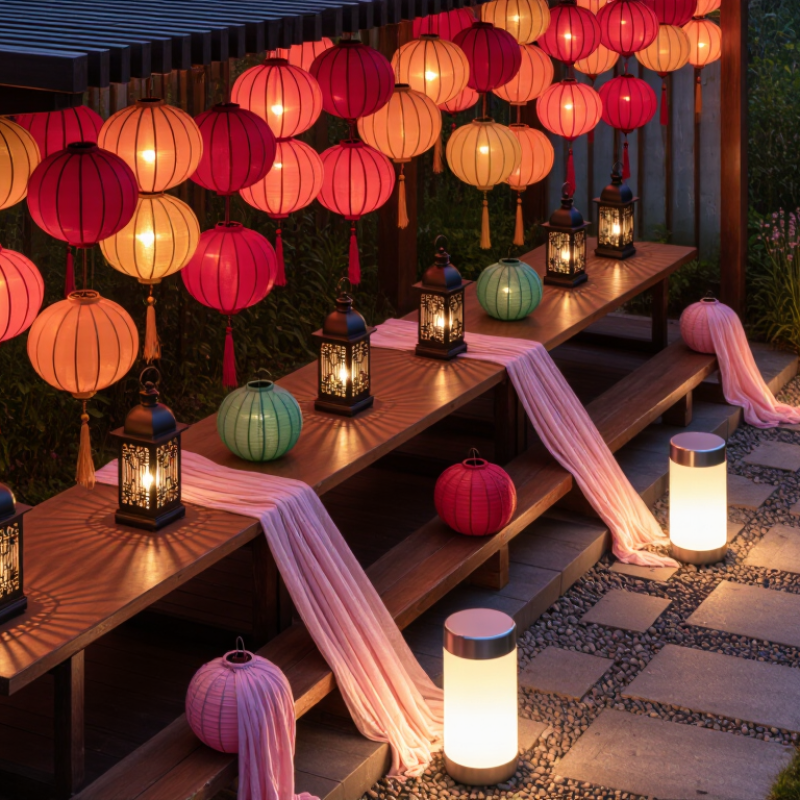
Traditional paper lanterns offer buyers a soft glow and a light, graceful shape. Their familiar round forms suit festival tables, entryways, and covered patios. Look closely at the frame: evenly spaced ribs help the lantern keep its shape, while securely attached seams reduce sagging. Thin paper diffuses light gently, but it can crease or tear if handled roughly. Small details matter.
Decorative variations make the style easy to adapt. Pleated edges add texture, painted florals bring color, and tassels create movement beneath the frame. Some lanterns use layered paper panels or cutout patterns that cast delicate shadows on nearby walls. I find that simple designs often look better in clusters, especially when sizes differ slightly. Still, matching every color can feel a little too planned.
Before buying, consider where the lantern will hang and how it will be lit. Paper is best kept away from rain, damp storage, and open flames. For repeat use, check whether the frame folds without forcing it and whether the hanging loop feels secure. A slightly uneven fold may look charming in a handmade piece, though it can frustrate buyers seeking a crisp, symmetrical display. For outdoor settings, choose a sheltered spot and follow the lighting product’s instructions.
Festival Lanterns Shaped as Animals, Flowers, and Symbols
Animal-shaped festival lanterns bring a playful focal point to a gathering. Fish, rabbits, and birds are common choices, with curved frames that give their silhouettes movement. Look closely at the joints and hanging loops. They should feel secure, not merely decorative. Small details matter.
Flower lanterns suit spring events and intimate celebrations. Petal-shaped panels soften the light, while layered paper or fabric creates visible texture. Check how the material handles gentle handling and indoor airflow. A delicate edge can bend more easily than expected. That is easy to miss in a product photo.
Symbol-shaped lanterns, such as stars, moons, and traditional geometric motifs, often work well in rows or window displays. Their outlines remain clear from a distance, especially when the colors contrast with the background. For buyers, compare size, weight, lighting method, and whether the lantern is intended for indoor or outdoor use. Follow the maker’s care and setup instructions, and keep heat-producing lights away from paper or fabric. Brightness can also look different in a lit showroom than in a dim room. It takes a little judgment. A charming shape may not be the most practical choice for every space.
Modern LED Lanterns and Inflatable Display Lanterns
Modern LED lanterns work well for buyers who want a bright display without an open flame. Their light can outline a doorway, brighten a porch, or add color to a shop window. Choose a model with a stable base and a weather rating suited to its location. Check whether batteries or a nearby outlet will power it. Small details matter.
Warm-white LEDs create a softer, traditional look, while changing colors draw attention in busy public spaces. Before buying, inspect the frame, hanging loop, and battery compartment. A lantern that looks sturdy online may feel flimsy in person. If possible, review close-up photos and care instructions. Keep cords away from walkways, and test the light before hanging it outdoors.
Inflatable display lanterns make a bigger visual statement. Their broad shapes are easy to spot across a courtyard or event lawn, and many fold down for storage. The blower needs a suitable power source, and the fabric should be secured against gusts. That setup takes planning. Measure the display area before ordering, since an oversized lantern can crowd a narrow entrance. I would also check seams and anchor points; these details are easy to overlook when the design is appealing.
How Materials, Light Sources, and Construction Differ
Paper lanterns create a soft, diffused glow and are light enough for indoor hanging. Their thin surfaces show creases and small dents, so check seams and frame joints before buying. Bamboo or wire ribs hold the shape; collapsible designs pack neatly, but may need careful unfolding. Paper is less suited to damp outdoor settings.
Fabric lanterns, often made with polyester or cotton blends, feel sturdier and can be reused across seasons. Compare the stitching, attachment loops, and frame stability, not just the printed pattern. Metal lanterns offer a firmer structure and cast sharper shadows through cutout panels. They are usually heavier, so weak hooks can sag. No material wins every time.
Light source changes both appearance and handling. Battery-powered LEDs stay cool and work well inside paper or fabric shades; warm-white light gives a gentler look than bright, cool-white light. Check whether the battery compartment is easy to reach and whether the lantern includes a timer. Some buyers prefer a flickering effect, though it can look artificial up close. Small details matter. For outdoor displays, review the stated weather resistance and secure the frame against wind. A beautiful lantern can still disappoint if its light is too dim or its hanging point feels flimsy.
What Are the Top Types of Festive Lanterns for Buyers?
Typical lighting options by lantern material and construction
This chart compares common lighting options, not sales or market share. A value of 1 means the option is generally suitable; 0 means it is not generally recommended. Open flames should only be used in lanterns specifically designed for them. LEDs are a practical choice for paper, fabric, and bamboo lanterns.
Choosing a Lantern Type for the Occasion and Setting
Choosing a Lantern Type for the Occasion and Setting
The right festive lantern depends on where it will hang and how people will move nearby. Lightweight paper lanterns suit covered patios and indoor gatherings, where their soft glow adds color without crowding a table. For breezy porches, sturdier metal or weather-resistant lanterns are often more practical. Check the hanging point, too. A delicate hook may not support a heavy frame. Small details matter.
For family events, battery-powered lanterns reduce the chance of spills or accidental contact with a flame. Glass designs can look elegant on a dining table, but they need a stable, uncluttered surface. Outdoor pathways call for brighter, enclosed lights that are easy to spot after dusk. A lantern that looks charming in a shop may feel oversized in a narrow hallway.
Tips: Measure the space before buying. Test the light at the time of day you plan to use it. Keep paper and fabric lanterns away from heat, and secure outdoor styles against wind. I have found that color can appear quite different under warm bulbs, so a sample or quick evening test helps. It is easy to overlook that.