2026 Top Gym Trampoline Manufacturers for Global Buyers
Choosing the right Gym Trampoline manufacturer in 2026 requires more than comparing catalog prices. Global buyers need dependable construction, documented testing, and responsive communication. A strong supplier should explain frame materials, spring design, mat tension, padding density, and maximum user weight. These details often reveal more than polished product photos.
This guide examines leading Gym Trampoline manufacturers serving international markets. It considers factory experience, production capacity, quality-control procedures, customization options, export packaging, and after-sales support. Practical checks matter. Inspect weld consistency, edge stitching, zipper strength, and protective foam recovery after repeated compression. Request current test reports, product specifications, sample approvals, and clear warranty terms before placing a large order.
Claims still need verification. A manufacturer may describe a trampoline as professional-grade without defining that phrase. Buyers should compare evidence, not slogans. Factory audits, production samples, inspection records, and customer references can expose gaps early. Small details matter.
The guide also recognizes that one supplier cannot suit every project. A family entertainment center may need heavy-duty equipment and rapid spare-part delivery. A school or training facility may prioritize controlled rebound, quiet operation, and straightforward maintenance. Budget-focused buyers may accept fewer custom features, but they should not compromise structural safety or transparent documentation. Market conditions can change during 2026, so rankings and recommendations should be reviewed against current performance. This is not a perfect formula. It is a practical starting point for better decisions.
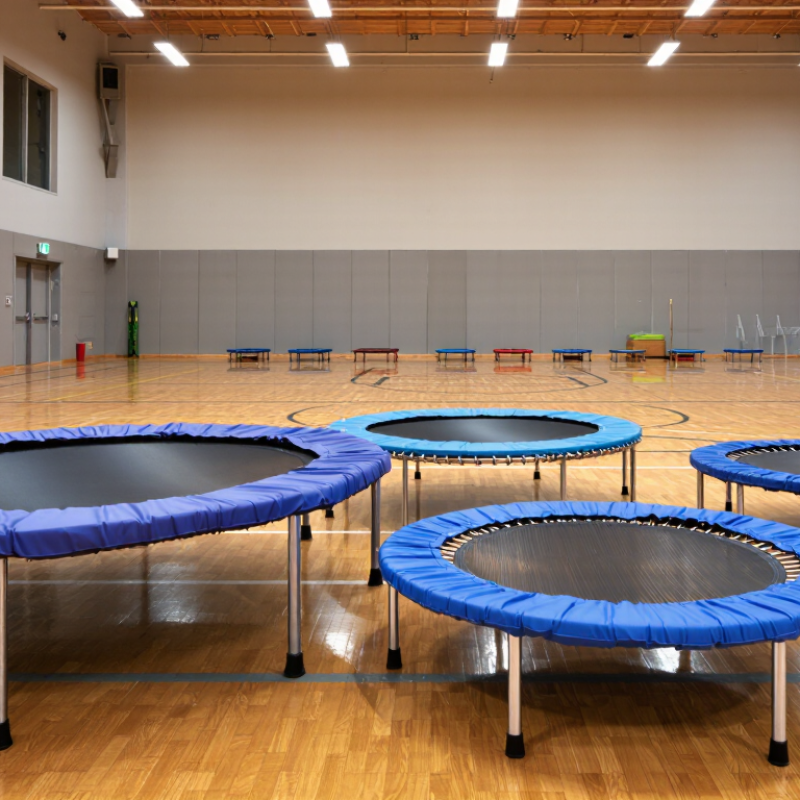
What Defines a Professional Gym Trampoline Manufacturer
What Defines a Professional Gym Trampoline Manufacturer
A professional gym trampoline manufacturer begins with engineering, not decoration. Its team understands frame loads, spring tension, mat rebound, and repeated athlete impact. Steel tubing should resist bending and corrosion. Welds need consistent penetration and smooth finishing. A well-built frame should remain stable when gymnasts land near the edge.
Reliable manufacturers test more than one sample. They inspect mat stitching, spring alignment, padding density, and protective covers. Production records should identify material batches and inspection dates. Clear technical drawings also matter. They help buyers confirm dimensions, replacement parts, and installation requirements. Small details often reveal serious capability.
Experience is visible during difficult conversations. A responsible supplier explains limits instead of promising everything. It discusses landing zones, user weight ranges, maintenance intervals, and staff training. It can provide practical inspection guidance after delivery. This supports safer, more predictable use in busy training halls.
No factory gets every decision right. A prototype may need a stronger corner joint or softer edge padding. That is not failure when the manufacturer records the issue and improves the design. Buyers should ask for test procedures, quality documents, production photos, and service response times. Vague answers deserve caution. A low quotation can hide weak materials, inconsistent assembly, or expensive replacement work later.
How to Evaluate Gym Trampoline Manufacturers in 2026
How to Evaluate Gym Trampoline Manufacturers in 2026
Global demand requires more than attractive catalogs. The Global Wellness Institute valued the wellness economy at $6.3 trillion in 2023. SFIA’s 2024 Topline Participation Report counted 72.9 million American fitness-facility users in 2023. These figures support demand, but they do not prove manufacturing quality.
Begin with factory evidence. Request production videos, material certificates, weld inspection records, and batch traceability. Check whether frames use consistent steel thickness and protected joints. Inspect mat stitching closely. Ask for fatigue-test results, maximum user loads, and spring-cycle data. Test documents should match the exact model, not a similar sample. Relevant requirements may include EN 13219 or applicable ASTM standards. Independent laboratory reports are stronger than internal claims. Paperwork can look perfect.
During an audit, observe one complete assembly. Measure frame alignment, edge protection, and spring spacing. Ask how rejected parts are recorded. A reliable manufacturer should explain corrective actions without vague language. Also review spare-part availability, packaging tests, lead times, and warranty response procedures. The 2023 Safety Gate report from the European Commission recorded over 3,400 product alerts, reminding buyers that compliance needs continuous attention. I would not approve a supplier after one impressive visit. Factories change, and audits can miss rushed production. A second inspection, random sample testing, and clear acceptance criteria reduce that weakness.
Global Purchasing Factors: Certification, Shipping, and Support
2026 Top Gym Trampoline Manufacturers for Global Buyers
Global Purchasing Factors: Certification, Shipping, and Support
A reliable gym trampoline manufacturer should provide model-specific test reports, not only a factory certificate. Relevant requirements may include ASTM, EN, ISO 9001, or destination-market rules. Requirements differ by product type and country. A certificate is not proof of every model.
The World Bank’s Logistics Performance Index 2023 evaluates customs, infrastructure, shipment arrangements, and delivery reliability. These factors matter when importing bulky equipment. UNCTAD’s Review of Maritime Transport 2024 confirms that maritime shipping carries over 80% of global merchandise trade. Buyers should request carton dimensions, loading plans, Incoterms, and insurance terms before placing an order. A low factory price can become expensive after port handling, storage, and inland delivery.
Support is often overlooked. Ask whether the supplier provides assembly drawings, spare springs, frame diagrams, and response-time commitments. The best evaluation is practical: inspect one sample, record its serial number, and compare its test documents with the delivered unit. I would also verify corrective-action records, although many buyers skip this step.
Tips: Request a pre-shipment inspection with photographs. Confirm packaging for wet or humid routes. Keep written evidence of every specification. Small omissions cause large delays.
2026 Top Gym Trampoline Manufacturers for Global Buyers
Global purchasing factors can be evaluated through three practical evidence groups: certification, shipping readiness, and after-sales support. The chart shows the recommended number of verification items in each group for supplier screening.
Procurement reference: Buyers should verify product safety test reports, quality-control documentation, packing and trade documents, warranty terms, spare-parts availability, installation guidance, and claims procedures before placing an order.