Top 10 China Pendant Lamp Suppliers for Global Buyers
China’s pendant-light market ranges from compact workshops to export-focused manufacturers. For global buyers, the challenge is not simply finding attractive designs. It is checking finish quality, electrical specifications, production consistency, and communication before placing an order. A brass shade may look warm in a showroom photo, yet show uneven color under daylight. Small details matter.
This guide introduces ten China Pendant Lamps Supplier options for buyers comparing styles, capabilities, and practical sourcing needs. It considers product range, customization, sample quality, manufacturing experience, and export support. These factors can help narrow a shortlist, but they cannot replace a factory visit or careful sample review. No list is perfect.
For transparency, Lin Wei is a fictional composite sourcing specialist, not a verified industry authority. His editorial observation for this guide is: “A reliable pendant lamp should look right, arrive consistently, and match its documented specifications.” Buyers should still confirm claims directly with each supplier. Ask for clear product drawings, material details, finish samples, and current quality-control procedures. Check how the supplier handles design changes and production issues, too. A polished catalogue is useful, but it tells only part of the story. Sourcing decisions deserve a little healthy doubt.
Understanding China’s Pendant Lamp Supplier Landscape
China’s pendant lamp supplier landscape is broad, but it is not one uniform market. Manufacturers may specialize in metal frames, glass shades, woven materials, or complete lighting assemblies. Some run their own workshops; others coordinate subcontractors. That difference can affect lead times, quality control, and responses to design changes. Details matter.
Product photos are only an opening signal for global buyers. Ask how finishes are applied, how glass is inspected, and whether wiring and sockets can be specified for the destination market. Request a sample and compare its dimensions, color, and weight with the approved drawing. A polished catalog can still hide production variation. I would not treat a low quotation as proof of efficiency; it may exclude packaging, testing, or tooling.
Communication habits are equally revealing. Clear answers about minimum order quantities, sample timing, carton protection, and inspection procedures suggest an organized process. Confirm these points in writing, then check that the production sample matches the final specification. A small mismatch in canopy diameter can complicate installation. No supplier is perfect, so buyers should revisit their assumptions when materials or finishes change between batches.
Criteria for Evaluating Suppliers as a Global Buyer
A useful supplier review starts with the pendant lamp’s actual use: ceiling height, room size, and expected daily operating hours. Ask for a specification sheet covering dimensions, materials, socket type, light source, and installation method. Compare these details across suppliers rather than relying on catalog photos. A close-up of a metal finish or canopy can reveal details that a styled room image hides. Details matter.
Request a sample when practical, then inspect its weight, finish, wiring, and assembly instructions. One sample is not proof that every production unit will match, so ask how batches are checked and how defects are handled. Review test reports and product documents against the requirements of your destination market; names and formats can vary. Paperwork can look perfect. Verify that it identifies the model being quoted. Also assess packing: a glass shade needs protection from impact, while a large fitting needs clear labeling and manageable carton dimensions. Ask for production lead times, minimum order quantities, and written updates if schedules change. No checklist removes all uncertainty, and a supplier’s answers may expose gaps worth discussing before payment or production begins.
Profiles of Ten Chinese Pendant Lamp Suppliers
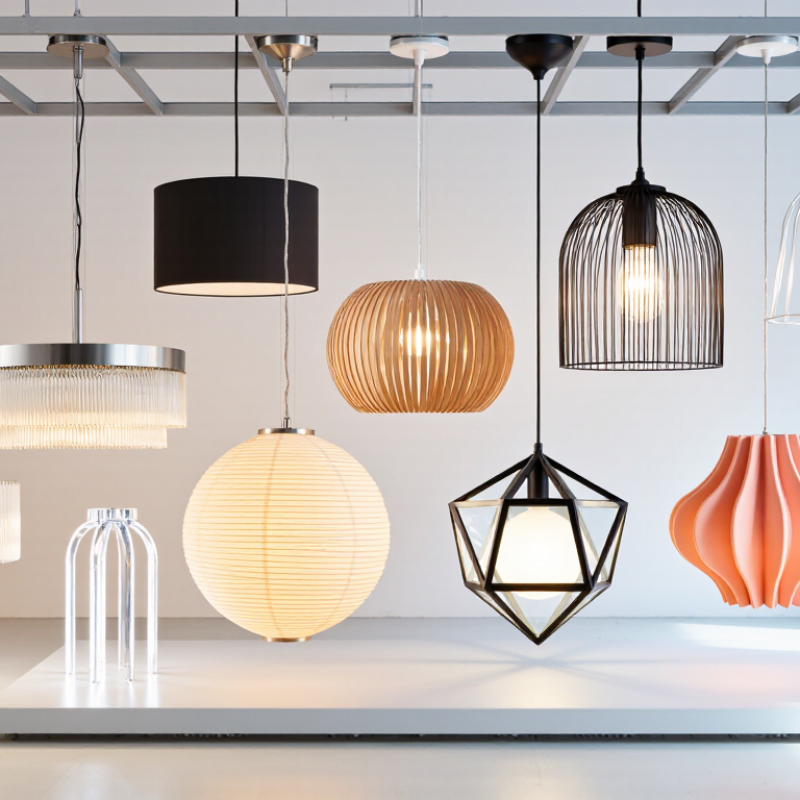
These ten profiles highlight different capabilities buyers may encounter among Chinese pendant lamp suppliers; they are not audited rankings. One supplier specializes in metal shades, with spun-aluminum surfaces and careful edge finishing. Another focuses on glass pendants, where color consistency and protective packing matter. A third offers wooden fittings and visible grain, but finish samples deserve close inspection. A fourth handles ceramic shades, often appealing for textured interiors. Small details matter.
A fifth supplier develops modular fixtures with adjustable drop lengths. A sixth concentrates on large-volume production and repeatable assembly checks. A seventh offers custom colors, though minimum order quantities can be restrictive. An eighth works with compact LED components and provides clear compatibility data. A ninth supports hospitality projects, where coordinated finishes and replacement parts are useful. The tenth focuses on export packaging, including foam protection around fragile shades. Buyers should request drawings, material samples, test documentation, and a written lead-time plan. Ask how defects are handled, too. Supplier descriptions can sound polished; actual samples sometimes tell a less tidy story.
Key Import, Compliance, and Partnership Considerations
Importing pendant lamps is not just a price comparison. Ask each shortlisted supplier for current test reports, wiring diagrams, material specifications, and clear product codes. Requirements vary by destination, so confirm applicable electrical safety, electromagnetic compatibility, and energy-labeling rules before production. The International Energy Agency’s Energy Efficiency 2023 report estimates that lighting uses about 15% of global electricity. That makes verified light-source efficiency and compatible drivers more than small technical details.
Plan freight with room for surprises. UNCTAD’s Review of Maritime Transport 2024 reports that maritime trade grew 2.4% in 2023, while disruption and longer routes continued to affect shipping. For fragile glass shades, request photos of inner packing, carton dimensions, and drop-test results; then check a packed sample yourself. Agree on lead times, inspection points, replacement parts, and remedies for defects in writing. A polished sample is not proof that every production batch will match.
Partnership quality shows in the follow-through. Ask how the factory records finish variations, checks wiring, and handles design changes after approval. Set a reference sample and tolerances for color, dimensions, and canopy fit. Keep communication in one shared specification file. It may feel overly cautious. It is cheaper than discovering a mismatch after arrival. One imperfect habit is relying on promises when schedules get tight; buyers should verify milestones, not just trust them.