
China Top 10 Cleanroom Swing Door Manufacturers

China’s cleanroom door industry serves hospitals, laboratories, pharmaceutical plants, electronics factories, and food-processing facilities. This guide introduces ten Chinese manufacturers associated with Cleanroom Swing Doors and controlled-environment access systems. It focuses on practical performance, not attractive catalogs alone.

A reliable comparison should examine door construction, sealing quality, surface finish, hardware, and installation support. Stainless steel panels can simplify cleaning. Smooth edges reduce dust traps. Reliable gaskets help limit air leakage between rooms. Vision windows should remain clear and securely sealed. Automatic closers, interlocks, and access controls also deserve careful inspection. Small details matter.

Technical evidence matters more than marketing language. Buyers should request product drawings, material specifications, test records, cleanroom compatibility data, and project references. Experience with ISO-classified rooms, GMP facilities, and pressure-controlled areas can reveal a manufacturer’s actual capability. Response time, replacement parts, commissioning, and after-sales service should also influence the decision.

No ranking is perfect. A strong factory may lack international visibility, while a famous supplier may not suit every project. Prices can change with dimensions, finishes, hardware, and certification requirements. This list should therefore support due diligence, not replace it. Readers should verify current certifications and visit production facilities when possible. A clean door is not automatically a cleanroom solution. Performance depends on design, installation, maintenance, and daily operating discipline. That is easy to overlook.
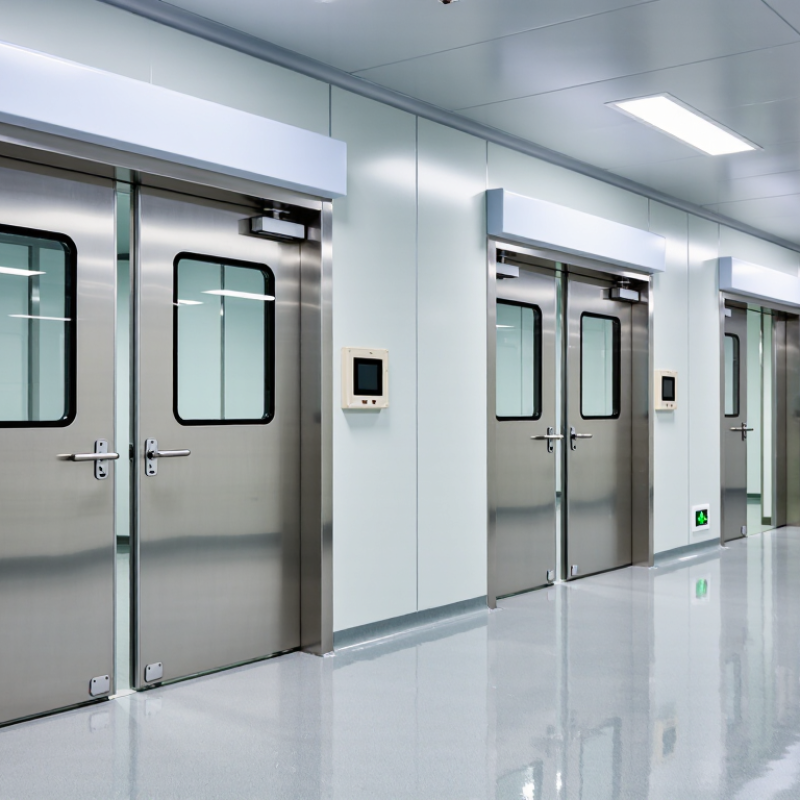
China Top 10 Cleanroom Swing Door Manufacturers

Cleanroom Swing Doors: Definition, Purpose, and Key Features

Cleanroom swing doors are hinged access doors designed to protect controlled environments during routine movement. They separate production rooms, airlocks, laboratories, and material corridors. Unlike ordinary doors, they support pressure control, particle reduction, and repeatable cleaning. Their purpose is practical: limit contamination while allowing staff and carts to pass without delay. In China’s cleanroom market, the top ten manufacturers are often compared through these operating details, not appearance alone.

Key features include smooth, non-porous panels and sealed edges that leave fewer places for dust to collect. Stainless steel, coated steel, or other cleanable surfaces may suit different chemical and hygiene conditions. A robust hinge system supports frequent cycles, while adjustable closers help the leaf return consistently. Vision panels improve safety without requiring unnecessary opening. Some models include interlocks, automatic operators, or impact-resistant lower sections for busy routes.

Performance depends on installation and maintenance as much as the door itself. Poor alignment can create gaps, noise, and uneven pressure control. No door is perfect. Even a well-built unit may fail when seals wear or cleaning methods are too aggressive. Buyers should verify cycle frequency, pressure differences, panel construction, fire requirements, and service access with qualified engineers. Factory testing is useful, but on-site observation reveals problems specifications may miss. A quiet closing action is valuable evidence.

How to Evaluate China’s Cleanroom Swing Door Manufacturers

China Top 10 Cleanroom Swing Door Manufacturers

Evaluating China’s cleanroom swing door manufacturers requires more than comparing quotations. MarketsandMarkets’ 2024 Cleanroom Technology report estimates the sector will grow from about USD 5.3 billion in 2023 to USD 7.6 billion by 2028. This growth increases supplier choices, but not necessarily quality. Ask for ISO 9001 certification, material certificates, welding procedures, and documented factory inspections. A reliable manufacturer should explain its test methods clearly.

Check whether the door design supports ISO 14644-1 room classifications. Review panel joints, gasket compression, hinge strength, automatic closing, and air leakage results. For pharmaceutical areas, compare the design with EU GMP Annex 1 expectations for cleanable surfaces and contamination control. Request full-size samples or recorded tests. Small details matter. A warped frame can damage pressure stability.

Site experience also deserves attention. Confirm installation training, spare-part availability, response times, and validation support. The manufacturer should provide drawings showing wall thickness, thresholds, interlocks, and swing clearance. Never accept a generic performance sheet without test conditions. It may hide important limits. One practical weakness is relying too heavily on factory claims; independent inspection is wiser. The Global Market Insights cleanroom technology analysis also identifies pharmaceutical and medical production as major demand areas, where traceability and repeatability matter more than the lowest price. A lower quotation may become expensive after failed commissioning, delayed parts, or repeated adjustments.

Top 10 China Cleanroom Swing Door Manufacturers by Product Strengths

China’s cleanroom swing door market includes manufacturers with different product strengths. The strongest suppliers often focus on airtight construction, stable operation, and controlled production environments. Their doors commonly use powder-coated steel, stainless steel, or insulated panels. Each material suits a different risk level and cleaning routine.

Among the top ten manufacturers, one group stands out for flush door leaves and smooth, low-particle surfaces. Another emphasizes reinforced frames for frequent trolley traffic. Several suppliers provide vision panels with sealed edges, reducing difficult cleaning points. Some specialize in automatic swing systems, while others offer dependable manual doors for smaller facilities. Fire-rated, sound-reducing, and temperature-controlled options also appear in their product ranges. Not every supplier performs equally well in every category.

Practical buyers should examine hinge durability, gasket compression, corner welding, and installation accuracy. A door may look polished but still leak around the frame. That detail matters. Experienced manufacturers usually provide drawings, material certificates, test records, and replacement-part guidance. They may also adapt dimensions, interlocking controls, access readers, and pass-through layouts. However, customization can increase lead time and maintenance complexity. Factory audits, sample inspections, and cycle testing reveal more than brochures. A realistic evaluation should check performance after repeated cleaning, pressure changes, and daily impacts. Some suppliers still need to improve documentation and after-sales response. That weakness deserves attention before purchase.

China Top 10 Cleanroom Swing Door Manufacturers - Top 10 China Cleanroom Swing Door Manufacturers by Product Strengths

Rank Anonymous Manufacturer Profile Primary Product Strength Typical Door Construction Common Materials and Finishes Cleanroom Performance Features Typical Applications Customization Capability
1 Profile A High-containment and airtight cleanroom doors Insulated single-leaf or double-leaf steel door with flush surfaces Galvanized steel, stainless steel, powder coating, or baked enamel Perimeter gaskets, concealed hinges, low-particle surfaces, optional drop seals Pharmaceutical production, sterile processing, biotechnology Door size, vision panel, interlock interface, hardware, and finish options
2 Profile B Modular cleanroom compatibility Flush sandwich-panel door with matching frame system Pre-painted steel, stainless steel, aluminum frame, insulated core Smooth joints, sealed frame interfaces, easy-to-clean door leaf Electronics, medical devices, laboratories, controlled warehouses Compatible panel thicknesses, opening direction, glazing, and access control
3 Profile C Corrosion-resistant stainless-steel construction Single- or double-action swing door with reinforced leaf 304 stainless steel; 316 stainless steel available for demanding environments Washdown-friendly surfaces, sealed edges, corrosion-resistant hardware Food processing, chemical laboratories, wet areas, healthcare facilities Surface grade, kick plates, crash plates, vision panels, and door closers
4 Profile D Pharmaceutical and GMP-oriented configurations Flush, insulated steel door with hygienic frame details Powder-coated steel, stainless steel, nonporous laminate options Rounded or sealed interfaces, minimal ledges, smooth cleanable surfaces GMP areas, sampling rooms, weighing rooms, clean corridors Pass-through windows, interlocking systems, automatic closers, documentation packages
5 Profile E Impact-resistant doors for intensive traffic Reinforced steel or stainless-steel swing door with protective plates Steel or stainless-steel leaf, polymer bumpers, stainless kick plates Durable hardware, replaceable protection components, sealed construction Material transfer routes, hospitals, logistics areas, production corridors Traffic direction, push plates, vision panels, protective hardware, and leaf thickness
6 Profile F Cost-effective standard cleanroom door systems Single-leaf insulated metal door with standard frame Powder-coated galvanized steel and optional stainless-steel components Basic perimeter sealing, flush panels, standard cleanroom hardware General laboratories, assembly rooms, low- to medium-grade clean areas Standard widths, colors, glazing sizes, handles, and closer selections
7 Profile G Fire-rated cleanroom door integration Insulated steel swing door designed for fire-rated assemblies Fire-rated steel leaf, mineral-based core, coated or stainless finish Intumescent or smoke seals where specified; compatible certified hardware Pharmaceutical plants, hospitals, laboratories, industrial facilities Rated glazing, panic hardware, door closers, access control, and frame options
8 Profile H Large-opening and double-leaf cleanroom doors Symmetrical or asymmetrical double-leaf swing configuration Coated steel, stainless steel, insulated cores, reinforced frames Coordinated closing, central seals, robust hinges, optional flush thresholds Equipment movement zones, clean manufacturing, storage and transfer areas Oversized dimensions, unequal leaves, magnetic hold-open units, and interlocks
9 Profile I Hygienic doors for healthcare and food environments Smooth-faced single-action or double-action door Stainless steel, coated steel, hygienic laminate, sealed edge profiles Easy sanitation, moisture-resistant surfaces, rounded or sealed details Operating rooms, clean kitchens, food preparation, clinical support areas Hands-free hardware, observation glazing, bump rails, and washdown options
10 Profile J Export-oriented configurable door packages Modular single- or double-leaf insulated swing door Galvanized steel, stainless steel, aluminum accessories, powder-coated finishes Sealed leaf and frame, adjustable hardware, cleanable flush surfaces Clean manufacturing, laboratories, healthcare, electronics, and food facilities Technical drawings, metric dimensions, hardware packages, glazing, and packaging requirements

Note: The profiles are intentionally anonymized. Product characteristics describe commonly specified cleanroom swing-door configurations in the Chinese manufacturing market; actual performance, certification, fire rating, air-leakage level, and cleanroom classification should be confirmed from each supplier’s current technical documentation.

Manufacturing Standards, Materials, and Customization Options

China’s top 10 cleanroom swing door manufacturers should be judged by manufacturing control, not catalog appearance. Reliable suppliers work against ISO 14644 requirements and project-specific GMP expectations. Their factories should control welding, polishing, sealing, and dimensional inspection. Every door needs traceable material records and documented quality checks.

Stainless steel remains common for demanding rooms. Grade 304 suits many controlled environments, while Grade 316 offers better resistance in corrosive areas. Smooth panels, rounded edges, concealed hinges, and continuous seals reduce dust traps.

Silicone or EPDM gaskets must remain stable after repeated cleaning. Small details matter. A poorly aligned seal can weaken room pressure control.

Customization may include single or double leaves, viewing windows, automatic closers, access panels, and interlocking systems. Door thickness, frame depth, swing direction, and threshold design should match the wall system. Fire, pressure, hygiene, and accessibility requirements also need separate verification.

A polished specification can still fail during installation. Site measurements are essential, although they are sometimes treated as an afterthought. Buyers should request drawings, test records, coating details, and maintenance guidance before approving production. The best manufacturer is not simply the one offering the lowest price, but the one that can explain how each material and process supports cleanroom performance.

Pricing, Quality Control, and Export Service Considerations

China Top 10 Cleanroom Swing Door Manufacturers

When comparing China’s top cleanroom swing door manufacturers, price should never stand alone. A quotation may include only the door leaf and frame, while hinges, vision panels, seals, packing, and installation remain separate. Ask for a line-by-line quotation. Price is not value. A lower offer can hide thinner steel, weaker cores, or limited after-sales support. In my purchasing experience, confirming material grades and replacement costs prevents expensive surprises later.

Quality control deserves physical evidence. Request material certificates, dimensional inspection records, weld photographs, and surface-finish standards. The frame should sit squarely, and the gasket should compress evenly without visible gaps. For controlled environments, suppliers should explain air-leakage testing, hardware cleaning, and protection against corrosion. Small details matter. However, factory documents are not perfect proof. An independent pre-shipment inspection may reveal uneven gaps or scratched panels that photographs miss.

Export service can decide whether a technically good door arrives usable. Reliable suppliers provide approved drawings, packing dimensions, installation instructions, spare seals, and clear lead times. Confirm Incoterms, export packaging, customs documents, and responsibility for damaged components. Check whether the supplier has handled your destination’s electrical, fire, and cleanroom requirements. Communication quality is measurable: replies should answer dimensions, tolerances, and delivery risks directly. Some vendors promise fast support, yet respond slowly after payment. That weakness deserves attention before signing.

China Top 10 Cleanroom Swing Door Manufacturers - Pricing, Quality Control, and Export Service Considerations

ISO 14644-1 particle-concentration limits provide an objective quality-control reference when evaluating cleanroom swing-door suppliers.

The chart shows the maximum permitted concentration of airborne particles ≥0.5 μm for ISO Cleanroom Classes 5–8. When comparing manufacturers, buyers can use these limits to assess door sealing, installation quality, pressure-control performance, inspection records, pricing transparency, warranty terms, and export documentation. The values are standards-based references and are not company-specific rankings.

1 5