What Is Spray Drying Equipment Used For?
Spray Drying Equipment is used to convert liquid feeds into stable, free-flowing powders. It is common in food, dairy, pharmaceutical, biotechnology, and chemical manufacturing. The process atomizes a liquid into fine droplets, then contacts them with controlled hot air. Moisture evaporates quickly, while solids form small particles that can be collected from the drying chamber.
Think of milk concentrate becoming powder within seconds. Coffee extracts, flavorings, enzymes, proteins, and plant-based ingredients can follow a similar path. Manufacturers value this method because it can improve shelf stability, reduce transport weight, and support consistent dosing. Particle size, moisture content, bulk density, and solubility can be adjusted through feed concentration, air temperature, nozzle design, and airflow settings. Small changes matter.
It is not a magic solution. Heat-sensitive materials may lose quality if the process is poorly controlled. Sticky feeds can coat chamber walls, creating waste and cleaning problems. Experienced engineers usually begin with laboratory or pilot trials before selecting full-scale equipment. They examine thermal behavior, sanitation requirements, energy use, and powder recovery. These checks support reliable production rather than attractive but untested claims.
Real performance depends on the entire system. Feed preparation, atomization, drying, separation, and packaging must work together. Operators also need documented procedures and routine monitoring. Even then, results may vary between batches. That uncertainty deserves attention, not concealment. This guide explains what Spray Drying Equipment is used for, how it works, and where its practical limits appear.
What Is Spray Drying Equipment?
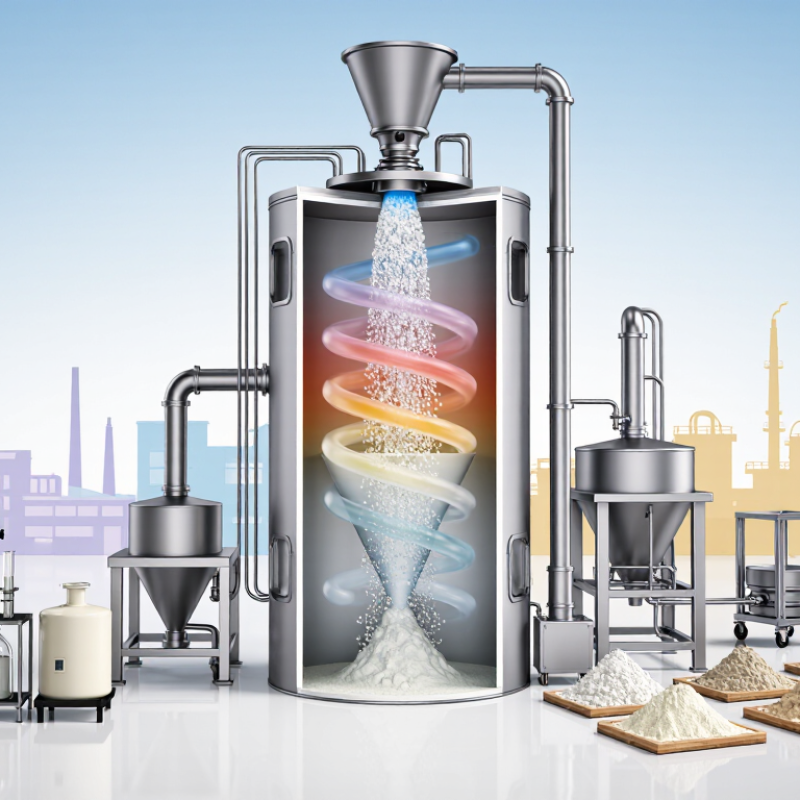
Spray drying equipment is an industrial system that turns liquid feeds into dry powders. It uses a feed pump, atomizer, drying chamber, air heater, and powder separator. The atomizer breaks liquid into fine droplets. Hot air then contacts each droplet, causing moisture to evaporate within seconds. A cyclone or filter collects the powder, while moist air leaves through the exhaust system. This controlled process supports consistent particle size, moisture content, and flowability.
Manufacturers use spray drying equipment for dairy ingredients, food additives, plant extracts, enzymes, ceramic slurries, and regulated pharmaceutical formulations. Operators can adjust inlet temperature, outlet temperature, feed rate, and atomization pressure. These settings influence powder density, solubility, and heat exposure. For example, a sensitive liquid may require lower temperatures and faster processing. However, not every material dries efficiently. Some feeds clog the atomizer or form sticky deposits. That limitation deserves attention.
Tips: Check moisture levels before and after drying. Clean the atomizer regularly. Confirm that temperature sensors remain accurate. Start with pilot trials before full production. In practice, results are rarely perfect on the first attempt. A slightly dry powder may flow well but lose valuable quality. Small adjustments often matter more than aggressive heating. Keep detailed operating records. They make troubleshooting far easier.
What Is Spray Drying Equipment Used For?
Spray drying equipment converts liquid feeds, emulsions, or suspensions into free-flowing powders by atomizing the feed into a stream of hot drying air. The chart shows representative final moisture targets commonly used for several spray-dried product categories.
Key Components and Operating Stages of Spray Dryers
Spray drying equipment converts liquid feeds into stable powders for food, pharmaceuticals, chemicals, and other process materials.
Its main components work as one controlled system. A feed tank holds the liquid and maintains a consistent mixture. A pump then sends it toward the atomizer.
The atomizer creates fine droplets through a rotary wheel or pressure nozzle. Smaller droplets usually dry faster.
Small changes matter.
Inside the drying chamber, heated air contacts the droplets and removes moisture within seconds. Air temperature, feed rate, and droplet size strongly affect powder quality.
Operators monitor both inlet and outlet temperatures.
The outlet reading often indicates the remaining moisture more clearly.
A cyclone separator removes much of the dry powder from the air stream. A bag filter can capture finer particles, while an exhaust fan controls airflow through the system.
The operating stages begin with feed preparation, including filtration, mixing, and temperature adjustment.
Atomization follows, creating a wide spray pattern inside the chamber. Drying occurs as droplets travel downward and lose water.
Separation collects the powder, then cooling and packaging help protect its texture.
Hygienic design also matters, especially around seals, pipelines, and chamber corners.
In practice, cleaning may take longer than expected. A clean-looking surface is not always fully clean.
Reliable operation requires validated settings, regular inspection, and careful moisture testing rather than guesswork.
Industries and Materials That Use Spray Drying Equipment
Spray drying equipment turns liquids, emulsions, and pumpable slurries into stable powders. A nozzle or rotary atomizer breaks the feed into fine droplets. Heated air removes moisture within seconds. The powder then falls into a collection chamber, often with a cyclone or fine-particle filter.
Food manufacturers use spray dryers for milk powder, coffee extracts, egg products, flavorings, and plant-based ingredients. Dairy powders need controlled moisture and good flow. Coffee requires careful temperature management. Otherwise, its aroma may fade. Fruit juices and vegetable extracts can also be dried, though sticky sugars often complicate collection. Operators may add a carrier material to improve powder handling.
Pharmaceutical production uses spray drying for excipients, inhalation powders, and heat-sensitive formulations. Precise control of droplet size, outlet temperature, and residence time affects product performance. Chemical plants produce pigments, catalysts, detergents, and water-soluble compounds with this method. Ceramic and advanced-material manufacturers dry fine suspensions before pressing or sintering. Those feeds may contain abrasive solids, so pump and chamber wear deserve attention.
The process is not a magic fix. A higher inlet temperature does not always mean better drying. Excess heat can damage sensitive ingredients, while insufficient heat leaves powder too wet. Reliable production depends on feed viscosity, atomization pressure, airflow, and cleaning procedures. Small changes can alter particle size, density, and solubility. Some plants still adjust these settings by trial and error, which can waste material. Careful testing remains essential.
Benefits and Practical Limitations of Spray Drying Systems
What Is Spray Drying Equipment Used For?
Benefits and Practical Limitations of Spray Drying Systems
Spray drying equipment converts liquid feeds into powders by atomizing droplets into a stream of heated air. It serves food, pharmaceutical, chemical, and biological processing applications. Operators can adjust air temperature, feed rate, nozzle pressure, and airflow. These settings influence particle size, moisture, density, and solubility.
The process works quickly. A droplet may dry within seconds. This speed can protect production capacity and reduce handling time. Continuous operation also supports consistent powder output when the feed remains stable. Encapsulation is another useful benefit. Sensitive oils, flavors, enzymes, or nutrients can receive a protective coating. In a well-tuned chamber, the powder may flow cleanly into sealed containers.
However, spray drying is not automatically gentle. Heat-sensitive materials can lose activity, color, or aroma. Energy consumption may become significant, especially when the feed contains large amounts of water. Sticky formulations can coat chamber walls and reduce yield. Cleaning then takes longer than expected. Small changes in viscosity can also disturb atomization.
The process is powerful, but not forgiving. A successful laboratory trial may fail during scale-up. Larger equipment changes residence time, airflow patterns, and collection behavior. Operators should measure inlet and outlet temperatures, residual moisture, bulk density, and recovery rate. Those figures reveal more than appearance alone. I would also question any powder that looks perfect but dissolves poorly. Performance must be checked after storage, not only at discharge.