
How to Choose the Best Bamboo Dishes for Your Business

Choosing Bamboo Dishes is not simply a matter of color or price. For restaurants, caterers, and retailers, the right choice must balance appearance, repeated-use performance, cleaning needs, and reliable supply. The scale of packaging waste makes material decisions increasingly important. The OECD’s Global Plastics Outlook (2022) reports that global plastic waste reached 353 million tonnes in 2019, with packaging accounting for 40 percent. UNEP’s Turning off the Tap report (2023) estimates that 19–23 million tonnes of plastic enter aquatic ecosystems annually. These figures explain the business interest in alternatives, but they do not prove every bamboo product has a lower impact. That distinction matters.

Start by checking what the dishes are actually made from. Some products use solid bamboo; others combine bamboo fibers with binders or coatings. Ask suppliers for clear material specifications, food-contact documentation, care instructions, and test results relevant to your intended use. Then consider practical details: plate weight, edge strength, stacking space, stain resistance, and how the surface looks after repeated washing. A warm, natural finish can suit a café counter, but scratches or inconsistent sizing may frustrate staff. Not so fast. Claims such as “compostable” also need context, since disposal options and product composition affect what happens at end of life. Compare samples under real service conditions before placing a large order. Record what holds up—and what does not. No sample is perfect. This guide explores how to assess quality, safety information, durability, design, supplier reliability, and total cost, so your choice fits both daily operations and customer expectations.
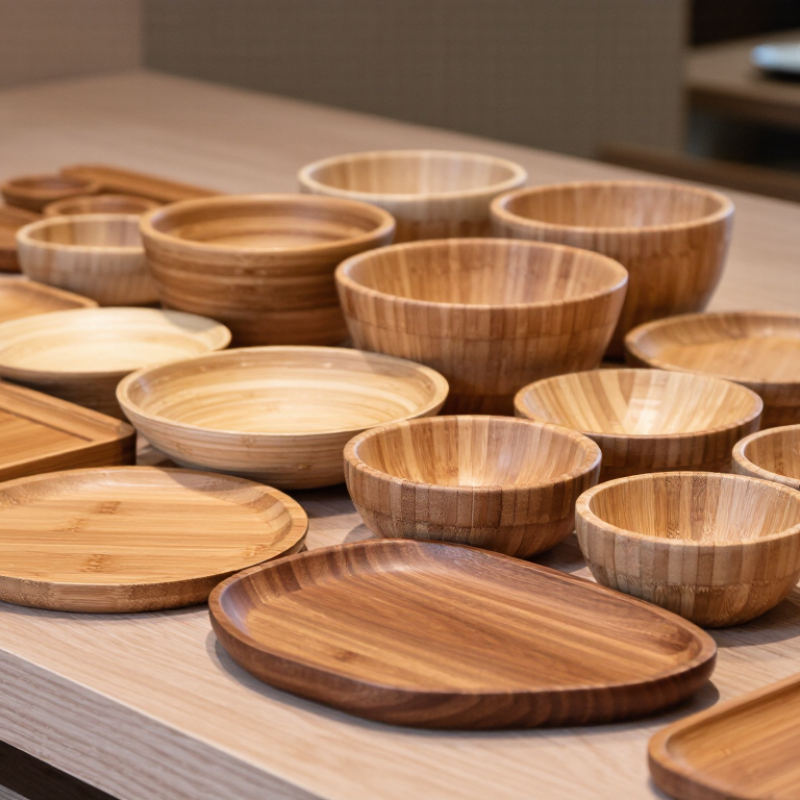
How to Choose the Best Bamboo Dishes for Your Business

Identify Your Business Needs and Customer Requirements

Before selecting bamboo dishes, map the service, not just the material. A café serving hot grain bowls needs different depth and rigidity than a caterer serving chilled desserts. Record portion sizes, peak-hour volume, storage space, washing capacity, and whether dishes are reused or disposed of after service. Ask customers what matters to them: appearance, comfort, sturdiness, or lower-waste options. Test samples with actual menu items; oily sauces and hot liquids can expose weak construction quickly.

Customer interest is useful, but it is not a purchase guarantee. The UN Environment Programme’s Food Waste Index Report 2024 estimates that food service generated 28% of global food waste in 2022. This does not measure tableware preferences, but it is a reminder to check portion fit. Choose dish sizes that suit the meals you actually sell, and track breakage, complaints, and replacement costs during a small trial. One detail is easy to miss: a dish that looks sustainable may still disappoint if it softens or stacks poorly.

Tips: Ask staff to test dishes during a busy shift. Note leaks, wobbling, and storage space. Then ask a few customers for specific feedback—not just whether they “like” the look. Expect surprises.

Compare Bamboo Materials, Construction, and Food-Safety Standards

When comparing bamboo dishes, look beyond the word “bamboo.” Solid bamboo is built from natural strips, while many lightweight dishes use bamboo fibers combined with a binder. Ask what materials are present and whether the product is intended for repeated food contact. A vague description is a reason to pause.

Construction affects daily performance. Check the rim for smoothness, the base for wobble, and the surface for gaps or rough patches. Press gently around joined areas; weak seams may loosen after repeated washing. A dense finish can resist moisture, but it should not hide cracks or peeling. Small details matter.

Food safety needs documentation, not assumptions. Request test reports or a supplier declaration covering the finished dish, including coatings and binders, and confirm that the testing matches your sales market and intended use. Check stated limits for hot foods, acidic ingredients, microwaves, and dishwashers. These vary by product. If guidance is unclear, treat that as a real purchasing risk. In practice, even a sturdy-looking plate can stain or warp when exposed to heat and moisture beyond its instructions. Test samples with your actual menu and cleaning routine before placing a large order.

How to Choose the Best Bamboo Dishes for Your Business - Compare Bamboo Materials, Construction, and Food-Safety Standards

Material and construction Typical strengths Limitations and care Food-safety considerations Best business fit What to verify before buying
Solid bamboo
Cut or shaped from bamboo, usually with a protective finish.
Natural appearance; lightweight; suitable for serving dry or room-temperature foods when the finished item is made for food contact. Can absorb moisture, stain, or crack if left wet. Usually requires hand washing and thorough drying; do not assume it is microwave- or dishwasher-safe. Food-contact suitability depends on the complete finished product, including any finish or coating. Confirm intended uses and care instructions with the supplier. Cafés, catering, and retail settings seeking reusable serving pieces for light-duty use. Ask what coating is used, whether it is intended for food contact, and whether the item has been tested for the foods, temperatures, and contact times you expect.
Laminated bamboo
Bamboo strips bonded into a board or dish using adhesive, often with a surface finish.
More consistent shape and thickness than many one-piece items; can be sturdy and visually uniform. Water or heat can damage joints, adhesive, or finish. Follow the maker’s cleaning instructions; do not infer dishwasher or microwave suitability from appearance. Adhesives and coatings are part of the food-contact article and need to be suitable for the intended conditions of use. Businesses wanting reusable plates, trays, or serving boards with a uniform look. Request details about adhesive and finish, intended temperature range, washing limits, and applicable food-contact test documentation.
Bamboo-fiber plastic composite
Plant fiber or powder combined with a polymer resin; some products use melamine-formaldehyde resin.
Can be molded into consistent, colorful shapes and may be more rigid than unbound plant fiber. Heat and care limits vary by formulation. Melamine tableware should not be used to heat food in a microwave; follow the product’s stated temperature and washing limits. “Bamboo” does not by itself establish safety. In the EU, plastic food-contact articles containing unauthorized bamboo or other plant powders have been treated as non-compliant; check current destination-market rules before sourcing. Only where the exact composition is disclosed and the product is confirmed compliant for the intended market and use. Get the full material composition and market-specific compliance evidence. Do not rely on a generic “FDA approved” claim or a bamboo-content claim alone.
Molded bamboo-pulp tableware
Formed from bamboo pulp or fiber, sometimes with binders, barriers, or surface coatings; commonly designed for single use.
Lightweight and convenient for takeaway or events. Some products are designed for hot, cold, or oily foods, depending on their barrier treatment. Moisture, grease, and heat resistance differ by product. “Compostable” does not mean suitable for every food, temperature, or disposal system. Confirm food-contact suitability for the exact food type and conditions. Compostability claims require separate evidence and apply only under the stated test and disposal conditions. Takeaway, catering, and event service when a disposable format is needed. Check for food-contact documentation, coating or additive details, temperature limits, and any compostability certification relevant to your local facilities.
Buyer note: Food-contact rules vary by market. In the United States, applicable FDA food-contact requirements depend on the materials and conditions of use; in the European Union, relevant requirements include Regulation (EC) No 1935/2004 and good manufacturing practice rules. These are regulatory frameworks, not blanket product approvals. Request documentation for the finished article and its intended use, and check local requirements before placing an order.

Evaluate Dish Designs, Sizes, Durability, and Care Needs

Choosing bamboo dishes starts with the way your business serves food. A café plating small pastries may need compact, shallow plates, while a lunch counter benefits from wider dishes with room for sides. Check rim height and usable surface area, not just the listed diameter. A plate can look generous and still crowd a sandwich. Looks matter.

Durability depends on the dish’s construction, finish, and daily handling. Ask suppliers for material details and care instructions, especially if the dishes contain bamboo fiber mixed with other materials. Do not assume every piece is dishwasher-safe. Confirm this in writing, then test a sample through your actual washing routine. Watch for rough edges, fading, warping, or lingering food odors. Repeated soaking can be hard on some finishes. Care routines also affect replacement costs, so choose products your staff can maintain consistently. I used to focus too much on appearance; that missed a practical issue.

Tips

Order a small sample set before committing. Serve a typical meal, stack the dishes, and check how they fit your storage shelves. Ask staff to wash them during a busy shift. Note any chips or awkward handling, then compare the results with the supplier’s care guidance. A sample reveals surprises.

Assess Suppliers, Pricing, Minimum Orders, and Sustainability Claims

A dependable bamboo-dish supplier should answer specific questions, not just send a glossy catalog. Request samples from the production line and check for rough edges, uneven finishes, odors, and warping after washing. Ask for food-contact test documents relevant to your market, plus details about coatings, adhesives, and quality checks. A sample can look perfect while a bulk run varies.

Compare the full cost, not only the unit price. Include freight, packaging, duties where applicable, and likely breakage. Confirm the minimum order quantity, reorder threshold, production lead time, and how the supplier handles defects. A low minimum may help a new café test demand, but a higher order can tie up cash and storage space. Small details matter. Get pricing and delivery terms in writing.

Treat sustainability claims as something to verify. Ask what part of the product is bamboo, whether coatings or binders are used, and what evidence supports claims about sourcing or compostability. Composting outcomes depend on product materials and local facilities. Ask for proof. I would not rely on a leaf icon or a broad “eco-friendly” label alone; those claims may sound clear while leaving important questions unanswered. Supplier responses should be specific, consistent, and easy to check.

How to Choose the Best Bamboo Dishes for Your Business

Compare suppliers using a consistent 1–5 screening score across the factors that affect purchasing, compliance, and sustainability.

How to use this chart: These scores are illustrative, not market-wide data. Score each supplier against verified quotations and documents. Check landed pricing, minimum order quantities, food-contact compliance, and evidence behind sustainability claims before placing an order.

Test Samples and Select the Best Bamboo Dishes for Your Business

When samples arrive, test them in the conditions your business actually faces. Serve a hot curry, a chilled dessert, and a sauce with strong color. Check whether the dish flexes, stains, or holds lingering odors. Small details matter. A shallow rim may spill during busy service, while a heavier plate can slow staff handling. Note dimensions, weight, and how easily each piece stacks on your shelves.

Ask the supplier for the exact material composition and care instructions. “Bamboo” can describe different constructions, and some products combine bamboo material with other components. Review available food-contact documentation, then wash samples as directed. Repeat the cycle several times. Look for rough edges, fading, cracks, or changes in shape. A single rinse is not a durability test. If instructions are unclear, treat that as a question to resolve before ordering.

Let staff use the samples during a realistic shift, not just during a quiet table setup. Ask servers whether plates are comfortable to carry and whether dishes fit your dishwashing routine. Record feedback beside the sample, including what people disliked. It is easy to give appearance too much weight; we might overlook storage or cleaning until later. Compare results against your menu, service pace, and replacement budget. A simple scorecard helps, but it will not capture every awkward moment, so revisit the leading option after another round of use.

Article Source:

1 5