
2026 Top Custom Table Legs Types for Global Buyers

Choosing the right table support can influence stability, appearance, installation time, and long-term customer satisfaction. For global buyers, Custom Table Legs are not merely decorative components. They are structural products that must match tabletop weight, room conditions, manufacturing tolerances, and local purchasing expectations.

This guide, “2026 Top Custom Table Legs Types for Global Buyers,” examines popular options for residential, hospitality, office, retail, and contract furniture projects. It considers steel, stainless steel, aluminum, cast iron, solid wood, and mixed-material designs. Each material behaves differently under repeated loading, moisture exposure, cleaning routines, and transportation. A slim powder-coated steel frame may suit a modern café, while adjustable stainless steel legs can offer better performance in humid commercial spaces. Heavy cast iron provides visual strength, but shipping costs and installation effort deserve careful review.

Practical sourcing also requires more than attractive product images. Buyers should confirm tube thickness, weld quality, base dimensions, leveling feet, finish durability, packaging protection, and available customization limits. Sample approval is strongly recommended. Small details matter. A two-millimeter mismatch can complicate assembly.

Reliable suppliers should provide clear drawings, material descriptions, inspection records, and realistic production timelines. Buyers should also verify applicable safety, chemical, labeling, and import requirements in their target markets. Standards can differ between countries, so general claims should not replace professional verification. This overview offers informed guidance based on common furniture manufacturing practices, but every project has its own risks. Some recommendations remain provisional until the tabletop, environment, and installation method are fully confirmed. That is worth remembering.
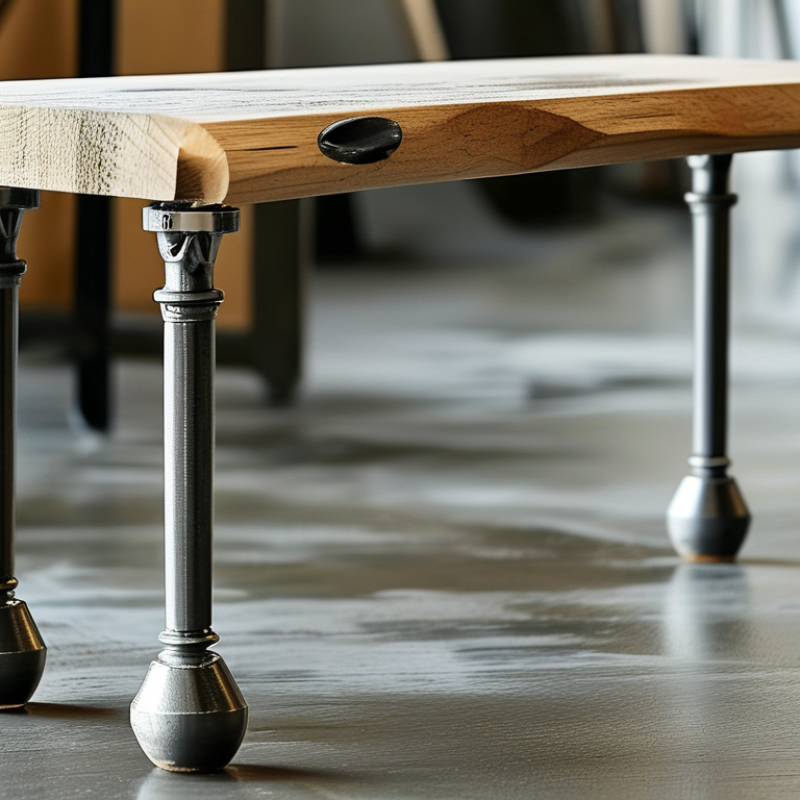
2026 Top Custom Table Legs Types for Global Buyers

Custom Table Leg Types: A Practical Classification for Global Buyers

Custom Table Leg Types: A Practical Classification for Global Buyers

Table legs should be classified by function, material, and installation method. This approach makes sourcing clearer across different markets. Steel legs suit dining tables, workbenches, and hospitality projects. They provide strong support with slim profiles. Solid wood legs add warmth and can be turned, tapered, or carved. Aluminum legs reduce weight, but they may feel less substantial.

The 2024 Global Furniture Market Outlook by IMARC Group reports continued furniture market expansion, driven by residential upgrades and commercial renovation. This trend supports demand for adaptable leg systems. Height-adjustable legs fit desks and shared workspaces. Folding legs help compact furniture move through narrow doors. Hairpin legs create a light, industrial appearance, though their stability depends heavily on fixing points. That detail is often underestimated.

Tips: Confirm load ratings, tube thickness, mounting plates, and floor protection before ordering. Ask for test records based on ISO 7170 or equivalent furniture stability requirements. Finish samples should be checked under natural light. Powder coating can hide small weld marks, but not poor alignment. For wooden legs, moisture content matters during shipping. The FAO’s Global Forest Resources Assessment 2020 highlights long-term pressure on forest resources, so buyers should request traceable timber documentation. I have found that the cheapest option rarely remains cheapest after packaging, replacements, and installation adjustments. Clearance is another practical concern. A beautiful leg can still fail when a chair cannot slide beneath the tabletop.

Material Options and Their Performance Characteristics

2026 Top Custom Table Legs Types for Global Buyers

Material choice controls stability, service life, shipping weight, and maintenance. Steel remains a strong option for dining tables, workstations, and heavy stone tops. The World Steel Association reported approximately 1.89 billion tonnes of crude steel production in 2023. That supply depth supports consistent sourcing and competitive fabrication. Powder-coated steel resists everyday scratches, but exposed edges can still corrode in coastal environments.

Aluminum reduces shipping weight and suits folding, outdoor, and mobile furniture. The International Aluminium Institute recorded about 72.8 million tonnes of primary aluminium production in 2023. It offers useful corrosion resistance, though thin profiles may flex under concentrated loads.

Stainless steel performs better in humid kitchens and hospitality spaces, but its higher cost needs justification. Solid wood brings warmth and can be repaired locally. However, moisture movement may loosen joints over time. No material wins every project.

Tips: Request load testing, coating specifications, and salt-spray results before approving samples. Compare the finished leg weight, not only the raw material price. Check ANSI/BIFMA or equivalent furniture-testing requirements for the target market. In practice, a beautiful leg can still fail when its foot design ignores uneven floors. That detail is easy to miss. Also review packaging tests, because welded corners and wooden surfaces can arrive damaged after long-distance transport.

Structural Designs for Different Table Functions

2026 Top Custom Table Legs Types for Global Buyers

Structural Designs for Different Table Functions

Custom table legs should be selected by use, not appearance alone. Dining tables need stable support for leaning, serving, and occasional impact. A four-leg frame spreads weight predictably, while a central pedestal provides more knee room. Pedestals need a wide base or concealed reinforcement to resist tipping.

For offices and meeting rooms, steel sled legs or rectangular loop frames create clear floor space. They also simplify chair movement and cleaning. Height-adjustable columns suit shared workspaces, but moving parts require accurate machining and tested locking systems. For heavy conference tops, crossbars reduce flexing, although they may obstruct users’ feet. Measure the underside carefully.

Coffee tables often use three legs, hairpin forms, or compact geometric frames. Three points can sit firmly on uneven floors, yet the top may rotate if joints are weak. Outdoor tables demand corrosion-resistant finishes, drainage paths, and fasteners suited to humid or coastal conditions. Indoor assumptions fail outdoors.

Global buyers should confirm load tests, weld quality, coating thickness, carton protection, and installation instructions with suppliers.

Check the finished table, not only a sample leg. A polished prototype can hide tolerance problems. I would request drawings showing mounting plates, screw positions, and clearance zones. Small errors become expensive after international shipment. Local safety and material requirements should guide the final specification, because one universal structure rarely fits every market.

Size, Finish, and Installation Standards by Market

For global buyers, custom table legs must match local size habits, not only the tabletop design. Standard dining tables usually finish at 710–760 mm high, including the top. North American projects often use inch-based drawings, while European and many Asian projects use millimetres. Confirm every dimension before production. A six-millimetre error can affect seating comfort.

Popular types include tapered steel legs, straight square legs, round pedestal bases, and adjustable feet. For café tables, a 450–600 mm base spread can improve stability without wasting floor space. Heavier dining tops may require wider plates, thicker tubing, or a central support.

I have found that buyers sometimes specify leg height alone. That is incomplete. The tabletop thickness changes the final height.

Finish requirements also vary by market and environment. Powder coating suits many indoor applications, but coastal projects need stronger corrosion protection and careful edge treatment. Matte black hides minor marks, while textured finishes reveal dust more easily. Installation should follow the buyer’s local hardware system. M6 or M8 threaded inserts are common, while some North American projects request imperial fasteners. Slotted mounting plates allow small alignment changes. Adjustable glides protect uneven floors. One detail is often missed: screw length must not penetrate the tabletop. Load testing, coating checks, and a clear installation drawing make the specification more reliable. Mistakes still happen, especially when metric and imperial notes appear on one drawing.

How to Select Custom Table Legs for International Projects

2026 Top Custom Table Legs Types for Global Buyers

Selecting custom table legs for an international project requires more than matching a visual style. A professional buyer should confirm load capacity, table dimensions, floor conditions, and installation tools. EN 1730 specifies performance test methods for domestic tables, while EN 12521 addresses safety and strength requirements. These standards do not replace project testing. They create a useful starting point.

Material choice depends on location. Powder-coated steel suits high-traffic interiors, but coastal projects need stronger corrosion protection. The World Steel Association reported global crude steel production of about 1.89 billion tonnes in 2023. This supports steel’s wide supply base, yet recycled content and local finishing still affect the final footprint. Solid timber legs offer warmth, but humidity changes can cause movement. A 2-millimeter adjustment gap may prevent uneven contact on imperfect floors.

Logistics deserves equal attention. The World Bank’s 2023 Logistics Performance Index shows clear differences in customs, tracking, and delivery reliability between markets. Use knock-down legs when container space matters. Ask for carton dimensions, gross weight, spare hardware, and installation drawings. Short legs can look elegant. They can also create uncomfortable knee clearance. I have seen attractive prototypes fail during site assembly because bolts were inaccessible. CAD files help, but they cannot reveal every uneven floor or regional tool limitation. Leave room for correction.

1 5